

Hair loss is not only a men's problem
In my outpatient practice, the patient who sits down and quietly says "doctor, my parting is becoming wider" is far more often a woman than a man. Hair fall in women is rarely just a cosmetic complaint. It affects sleep, confidence, how one dresses for a wedding, even whether someone wants to attend a family function at all.
The good news, and I say this to every patient, is that female hair loss is one of the most treatable conditions we deal with — provided we identify the correct cause and begin early. Modern medicine now allows us to slow further thinning and, in many cases, regrow a meaningful amount of hair.
What are the main reasons for female hair loss?
Androgenetic alopecia — commonly called female pattern hair loss — is largely genetic. Androgens are hormones that regulate growth and reproduction, and they influence everything from bone density to hair. Over time these hormones cause the follicle to shrink (we call it miniaturisation), so each new hair grows finer and shorter until the follicle stops producing altogether. Hormonal events such as starting or stopping oral contraceptive pills, pregnancy, PCOS and menopause frequently unmask it.
Telogen effluvium is the diffuse shedding I see most often after a shock to the body. Hair normally grows in staggered cycles, but a triggering event pushes a large number of follicles into the shedding phase together — childbirth, a severe viral illness or dengue, major surgery, crash dieting, anaemia, thyroid disturbance, or prolonged emotional stress. Most women recover within three to six months once the trigger settles, though in a few it becomes chronic and continues for months or years.
Anagen effluvium is sudden, rapid shedding during the active growth phase, caused by something directly damaging the follicle — chemotherapy being the classic example. Once the offending agent is stopped, follicles usually recover and hair returns, although occasionally some thinning persists.
Traction alopecia is entirely mechanical and, I must say, very common in India. Tight ponytails, heavy braids, tightly pinned buns and cornrows pull on the follicle day after day. Caught early and the hairstyle loosened, it reverses beautifully. Ignored for years, the follicle scars and the loss becomes permanent — most visibly along the temples and hairline.
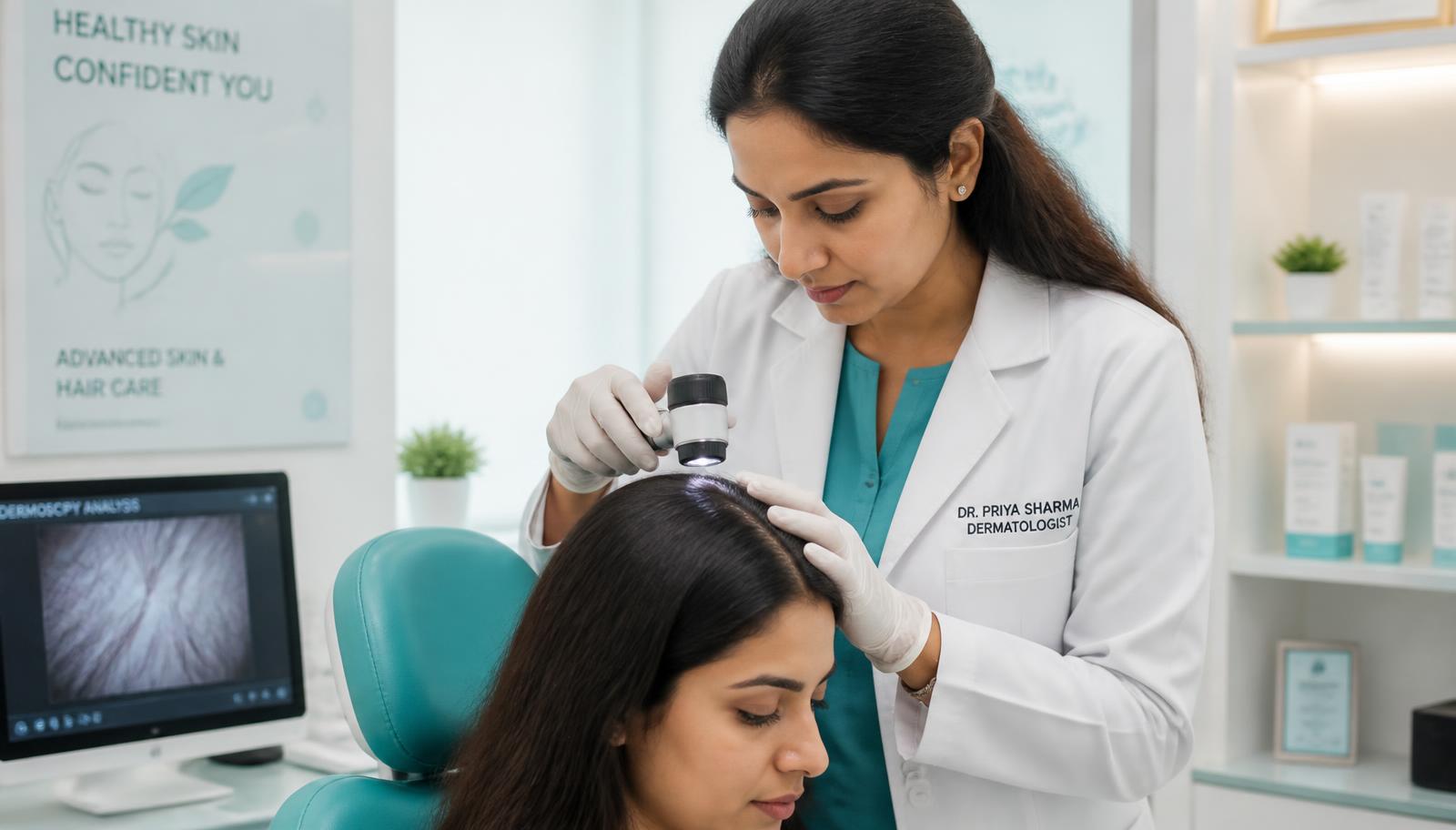
How do you stop hair loss and regrow hair naturally?
We cannot change genetics, but a surprising amount of hair fall I see is driven by daily habits that are entirely fixable. Before writing any prescription, I ask patients to correct these:
Protect the scalp from the sun. Indian sun is harsh. Use sunscreen of at least SPF 30 on exposed skin, and use a scarf, hat or umbrella — the scalp along the parting burns quietly and repeatedly.
Eat for your hair. Hair is protein. A diet with adequate dal, eggs, paneer, fish or chicken, green leafy vegetables, nuts and healthy fats supports both follicle strength and hormonal balance. Very low-calorie diets are one of the most common causes of shedding I encounter in young women.
Review your supplements and medicines. Some medications and unregulated supplements worsen hair fall. Bring your full list to your consultation rather than stopping anything on your own.
Stop smoking, and avoid second-hand smoke. Beyond the well-known risks, smoking reduces blood supply to the follicle and directly accelerates thinning.

What are the best treatments for female hair loss?
Treatment must fit the cause, so please share your full medical history, current medications and lifestyle with your doctor before starting anything. These are the options most commonly prescribed:
Minoxidil, in use since the 1970s, remains the first-line topical treatment. It prolongs the growth phase and encourages follicular cells to produce thicker hair. Different strengths are used depending on the situation. It is not advised if you are pregnant, breastfeeding, or planning a pregnancy.
Spironolactone is useful when excess androgen activity is driving the loss — often alongside PCOS or other hormonal imbalance. It too must be avoided in pregnancy, while nursing, or when planning conception.
Iron and nutritional correction matters greatly in Indian women, where low ferritin is extremely common. A simple blood test for ferritin, thyroid function and vitamin D often explains a hair fall that looked mysterious, and correcting it can be transformative.
One honest caution: no treatment works overnight. Give any regimen a minimum of three to six months before judging it, because that is simply how the hair cycle behaves.
When should you see a doctor about thinning hair?
Managing hair loss is a personal decision, but you should not have to navigate it alone. Thinning hair rarely threatens physical health — yet how we look is closely tied to how we feel, and I never dismiss that.
See a doctor if you notice a widening parting, visible scalp, clumps of hair while washing, or shedding that continues beyond three months. Early evaluation is the single biggest factor in how much hair we can save.
Even advanced hair loss is worth reviewing. With the correct diagnosis, a realistic plan and consistent follow-up, regrowth and retention are genuinely achievable for most women.
Hair loss does not have to be part of your story. Whether the change is recent or has troubled you for years, there is a treatment that fits your situation and your budget — speak to a qualified provider and begin.
Frequently asked questions
- How much hair fall per day is normal?
- Losing 50 to 100 hairs a day is normal. Consistently more than that, or noticeable thinning of the parting, deserves a medical review.
- Is hair fall after delivery permanent?
- No. Post-partum shedding is telogen effluvium and usually settles on its own within six to nine months, especially if iron, thyroid and nutrition are corrected.
- Can minoxidil be used by women?
- Yes, minoxidil is commonly prescribed for women in appropriate strengths, but it should not be used during pregnancy, breastfeeding, or while planning a pregnancy.
- Which tests are done for hair loss in women?
- Typically serum ferritin, complete blood count, thyroid profile and vitamin D, with hormonal tests added when PCOS or androgen excess is suspected.